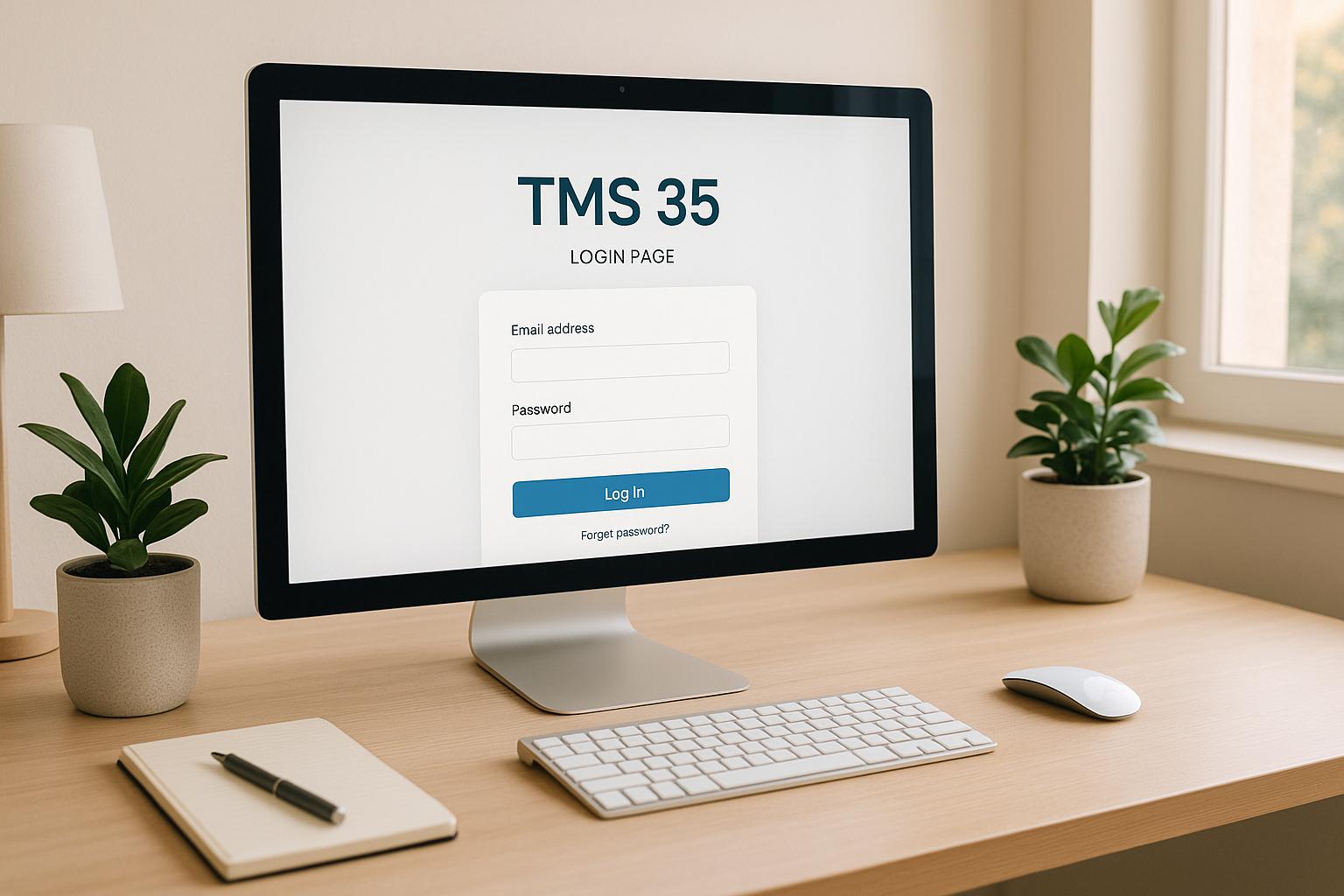
TMS 35 is a centralized platform designed for managing training modules, tracking progress, and generating certifications. This guide will help you log in, troubleshoot issues, and resolve common problems effectively.
Key Steps to Access TMS 35:
- System Requirements: Ensure your device meets the specifications (e.g., Windows 10/11 Pro, 8GB RAM, Intel Core i5 processor) and use updated browsers like Google Chrome or Mozilla Firefox.
- Login Process: Visit https://tms35.nepsetms.com.np, enter your username and password, and complete CAPTCHA or multi-factor authentication if required.
- Troubleshooting Tips: For forgotten credentials, use the "Forgot Password" option or contact your administrator. Clear browser cache, enable JavaScript, and disable ad blockers for technical issues.
Security Tips:
- Avoid saving passwords on shared devices.
- Always log out after use.
Follow these steps to access your training dashboard, manage courses, and update account settings securely.
TMS Provider: The Login Process
System Requirements for TMS 35
Before diving into TMS 35, make sure your computer meets the necessary technical specifications. This ensures smooth access and an optimal experience while using the platform.
Device and Browser Compatibility
To run TMS 35, your system needs a 64-bit operating system, an Intel Core i5 processor (i5‑3xxx series), 8 GB of RAM, and at least 20 GB of free disk space [1].
The platform supports Windows 10/11 Professional and Enterprise editions, as well as Windows Server 2022 (Standard/Datacenter) [1]. For the best performance, use Windows 10 Professional or Windows Server 2019 Standard [1]. While TMS 35 may function on older systems like Windows 10 (versions v1607, v1703, v1709, v1809), Windows 8, Windows Server 2019, and 2016, newer versions are recommended for better compatibility [1]. If you’re using high-resolution displays (2K or 4K with scaling up to 125%), it’s advisable to run Windows 10 v1703 or Windows Server 2016 (or later) [1].
For browsing, stick to the latest versions of Google Chrome or Mozilla Firefox to take full advantage of TMS 35’s features. Other browsers might not support all functionalities [2]. Additionally, ensure your network settings align with these requirements to avoid interruptions.
Network and Security Settings
If you encounter sluggish performance with memory-intensive tasks, you can allocate more memory to your browser. For Google Chrome, add the flag --max_old_space_size=4096 under the shortcut’s ‘Properties’ [2]. For Mozilla Firefox, modify the browser.cache.memory.capacity setting in the about:config menu [2]. Be cautious, though – incorrect configurations could destabilize your browser.
How to Log Into TMS 35
Ready to access TMS 35? Follow these steps to log in securely and manage your training data without a hitch.
Finding the Login Page
To begin, head to the official TMS 35 login portal at https://tms35.nepsetms.com.np [3]. Either type the URL directly into your browser or use an official bookmark to avoid the risk of phishing sites designed to steal your credentials.
Before proceeding, double-check that the URL and page branding match the official site. If anything seems off, contact your administrator immediately for guidance.
Entering Your Login Information
Start by entering your username in the designated field. This username was provided by your system administrator when your account was set up. If you’re unsure of your username, don’t guess – reach out to your administrator for clarification.
Next, input your password carefully, keeping in mind that it’s case-sensitive. If your system uses Active Directory integration, make sure to select the correct domain during login.
Some setups may also require you to fill in server and database fields if they aren’t already pre-filled.
For convenience, many TMS 35 systems offer a "Remember Me" option to save your login details for future sessions. However, it’s best to avoid using this feature on shared or public computers to maintain security.
Multi-Factor Authentication Steps
After entering your credentials, you’ll need to complete an extra layer of security verification. This typically involves a captcha code, which you must type in exactly as displayed. If the code is hard to read, you can refresh it for a new one. Alternatively, some systems offer an audio verification option, which reads the characters aloud – a helpful feature for users with visual impairments.
Once you’ve successfully handled the captcha or audio verification, click the "Login" button to proceed. If your organization uses a "Prompt for User Group" feature and you belong to multiple groups, a pop-up window may appear asking you to select your user group before moving forward.
For organizations with Single Sign-On (SSO) enabled, you’ll be redirected to your company’s internal login page instead of entering your credentials directly into TMS 35. This streamlines access by using the same login details you use for other company systems.
Additional Security Tips
To keep your account secure, never save your password in your browser or share your login details with others. Always log out of TMS 35 completely before closing your browser, especially on shared or public devices. Once logged in, you can explore your dashboard to access training courses and adjust your account settings.
sbb-itb-fdb084f
Fixing Common Login Problems
Sometimes, even with the correct credentials and setup, you might run into issues accessing TMS 35. Here’s a guide to help you troubleshoot common login problems and get back into the system quickly.
Forgotten Username or Password
Avoid repeatedly guessing your login details – too many failed attempts can lock your account. Instead, use the "Forgot Password?" or "Reset Password" link on the TMS 35 login page, usually located near the password field or login button.
Once you click the link, you’ll be prompted to enter your registered email address or username. The system will then send recovery instructions to your email. If you don’t see the email right away, check your spam or junk folder.
If you’ve forgotten your username, use the "Forgot Username?" option and enter your registered email to retrieve it.
Still having trouble? If the reset link doesn’t work or you don’t receive the email, contact your system administrator. They can manually reset your credentials and confirm that your email is correctly set up in the system.
Locked Account Issues
Account lockouts typically happen after three to five failed login attempts in a short period. If your account gets locked, you’ll see an error message stating that access has been temporarily or permanently disabled.
Temporary locks will usually resolve on their own after a waiting period. During this time, resist the urge to try logging in again, as this can extend the lockout period.
For permanent lockouts or urgent access needs, reach out to your system administrator. Provide your username and explain the situation so they can unlock your account and check for any underlying issues.
If lockouts happen often, it might be worth discussing with your administrator whether updating your password or tweaking your security settings could help. If lockouts aren’t the problem, technical issues might be the root cause of login failures.
Technical Problems
Some login issues stem from technical glitches. Here’s how to address them:
- Clear your browser cache and cookies to eliminate outdated data that could interfere with the login process.
- Ensure that JavaScript is enabled in your browser settings, as errors in JavaScript can disrupt the login form.
- Disable any ad blockers or security extensions that might be interfering with the system.
- If the page loads slowly or times out, check your network connection or VPN settings.
If you encounter security alerts or certificate warnings while accessing TMS 35, don’t ignore them. Instead, contact your IT security team for guidance on how to proceed safely.
For errors like "Server Error" or "Database Connection Failed", the issue is likely with the TMS 35 system itself. Report these problems to your system administrator, including details about when the error occurred and what you were doing at the time.
If possible, try logging in from a different browser or device. If the system works elsewhere, the issue might be specific to your usual setup. In that case, work with your IT support team to troubleshoot your primary device.
Using TMS 35 After Login
Once you’re logged in, the dashboard becomes your go-to place for navigating the platform. From here, you can dive into training resources or manage your account with ease.
Main Dashboard Features
The dashboard serves as the control center for all your training and account management needs. Depending on your role and access level, you might see slightly different options and features.
Finding Training Courses
To browse or search for courses that suit your needs, head to the Training Catalog in the main menu. You can use filters to narrow down your options. If you run into any issues, check the help section for guidance.
Updating Account Information
Keeping your account details up to date is just as important as completing your training. Click on your profile icon and select Account Settings to update your contact information or adjust security preferences. Don’t forget to log out once you’re done to keep your account secure.
Conclusion
To access TMS 35, it’s crucial to follow the correct steps. Start by ensuring your system meets the necessary compatibility requirements and that your network settings allow for secure connections. When logging in, carefully input your username and password (both are case-sensitive). If your organization uses Active Directory, make sure to select the right domain. Depending on your configuration, you might see additional fields during the login process. If you encounter any issues, refer to the troubleshooting steps provided.
For persistent login problems, you can use the "Forgot Password" feature or reach out to your administrator for assistance [4]. VA employees can also seek help by contacting VATMSCoP@va.gov [5].
Once logged in successfully, remember to update your account information as needed, log out securely after use, and take advantage of the training resources available. TMS 35 serves as a powerful platform to support your professional development and training needs within the defense and intelligence sectors.
FAQs
What can I do if I can’t log into TMS 35 even though my username and password are correct?
If you’re having trouble logging in even though you’re certain your username and password are correct, start by carefully reviewing what you’ve entered. Make sure the credentials match exactly, paying attention to case sensitivity, and check for any extra spaces before or after the entries.
Still stuck? Double-check that your internet connection is stable and that you’re using a supported browser. Sometimes, clearing your browser’s cache and cookies can fix login issues. If these steps don’t solve the problem, it’s time to reach out to your system administrator or IT support team for help.
How can I make sure my device is compatible with TMS 35 to avoid technical problems?
To make sure your device works smoothly with TMS 35, you’ll need to check a few things:
- Operating System: Your device should be running a supported OS, like Windows 10 or later, or macOS 11 or later.
- Browser: Stick to an updated browser such as Chrome, Edge, or Safari for the best results.
- Internet Connection: A stable, high-speed internet connection is key to avoiding interruptions.
Also, keeping your system and software up to date can help prevent any hiccups. If you run into trouble, try clearing your browser cache or switching to a different device. Still stuck? Reach out to your IT team or the TMS 35 help desk for support.
What should I do if I suspect a security breach while using TMS 35?
If you think your account may have been compromised while using TMS 35, take action right away to safeguard your information. Start by logging out of the system on all devices and updating your password. Make sure the new password is strong and completely unique – steer clear of reusing old passwords or anything easy to guess.
After securing your account, notify your organization’s IT or security team immediately. Share any relevant details, like unusual activity, error messages, or signs of unauthorized access. They’ll provide guidance on next steps to protect your account and investigate the situation.
To reduce the risk of future breaches, keep your devices and software up to date, avoid using public or unsecured networks when accessing the system, and never share your login credentials with anyone. These steps can help keep your account and information safe.